Comprehensive Guide to the DVSA Theory Test (2026 Edition)
The DVSA Theory Test is a crictiacal step for learner drivers in the UK. It consists of two parts; a multiple-choice section and a hazard perception test. this guide explores all mulitiple choice topics, with special focus on traffic signs and newly introduced emergency procedures involving CPR and AEDs.
Part1: The 14 Multiple-Choice Questions
The multiple-choice section covers a wide range of driving knowledge. You must answer 43 out of 50 questions to pass.
1. ALERTNESS : Focuses on being aware of your surroundings and aviod distractions
2. ATTITUDE : Emphasises consideration for other road users and following road etiquette
3. SAFETY AND YOUR VEHICLE: covers vehicle maintenance, safety equipment, and environment impact.
4. SAFETY MARGINS: Understanding stopping distances and maintaining gaps between vehicles
5. HAZARD AWARENESS: Identifying potential potential and developing hazards
6. VULNERABLE ROAD USERS: Protecting pedestrians, cyclists, motorcyclists, and horse riders
7. OTHER TYPES OF VEHICLE: Dealing with large vehicles,buses, and emergency service vehicles
8. VEHICLE HANDLING: How to control your vehicle in different in different weather and road conditions
9. MOTORWAY RULES: Specific regulations and safety procedures for driving on motorways
10. RULES OF THE ROAD: General traffic laws, speed limits, and lane usage.
11. ROAD AND TRAFFIC SIGNS: Recognising and following various sins and signals
12. ESSENTIAL DOCUMENTS: Understanding Insurance, MOT, licenses and registration
13. INCIDENTS, ACCIDENTS AND EMERGENCIES: How to react to collisions, breakdowns, and first aid situations
14. VEHICLE LOADING: safe ways to carry passengers, luggage, and trailers
click here to take GOV.UK free theory test
click here DVSA video theory Test
click here hazard perception test official DVSA guide
Part 2: Road and Traffic Signs
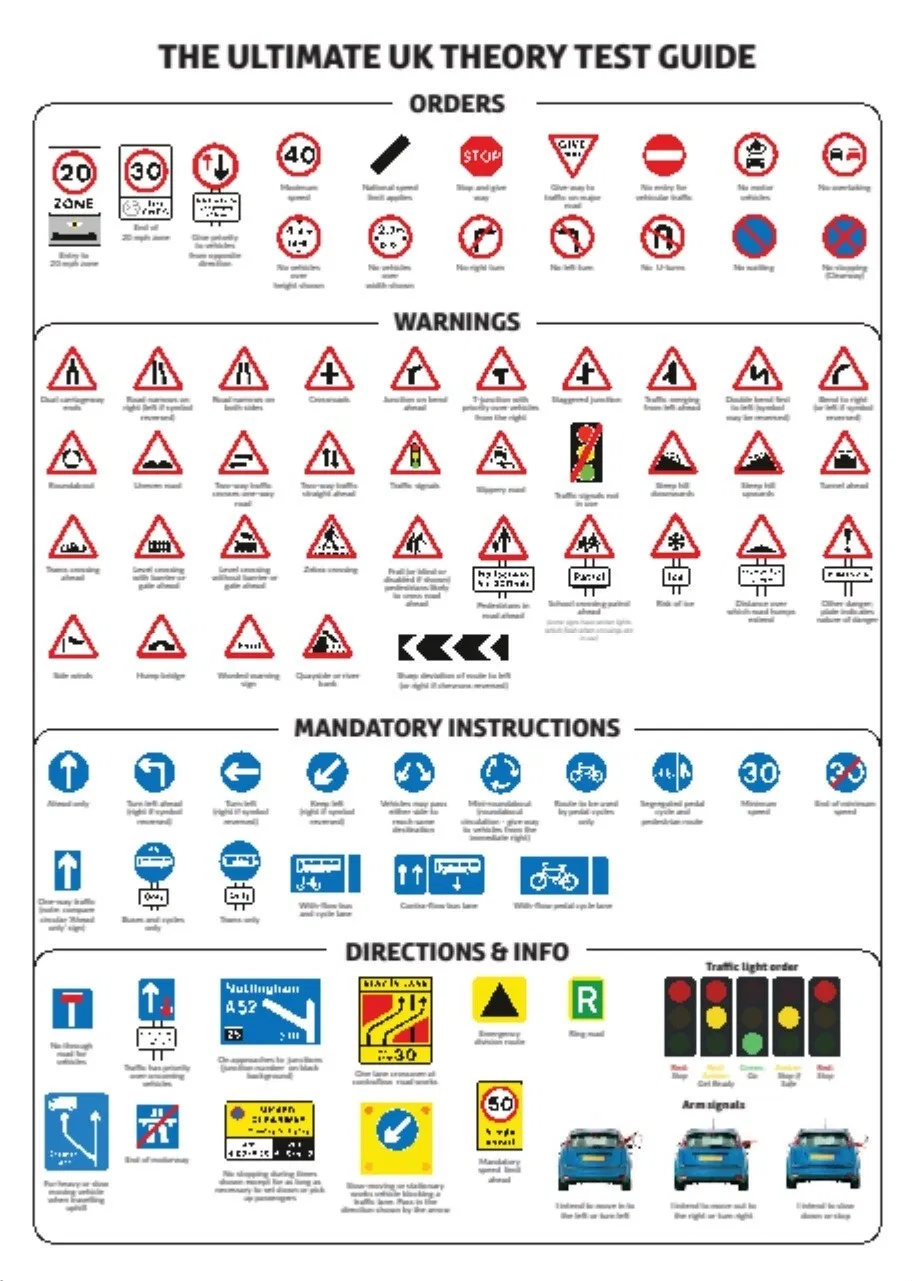
Traffic signs are categorised by shape and colour to help drivers recognise them quickly.
1. Signs Giving Orders
These signs are mostly circular.
- Red Circles: Prohibit certain actions (e,g, No Entry, Speed Limits).
- Blue Circles: Give postion instructions (e.g, Turn Left Ahead, Mini-Roundabout)
- Exception: The "STOP" sign is octagonal for high visibility.
2. Warning Signs
These signs are mostly triangular with a red border. They alert you to potential hazards ahead, such as sharp bends, crossroads, or school crossings.
3. Information and Direction Signs
These are mostly rectangular.
- Blue: Motorway Information
- Green: Primary Route Information (e,g, A Roads)
- White: Local or non primary route information
- yellow: Temporary information (e.g., road works or diversions)
PRO TIP: Always look for the plates below sins, as they often qualify the message with specific times or distances.
DVSA 2026 Hazard Perception Test for learners
The DVSA hazard perception test is a crucial part of the driving theory test for learners in the UK. It assesses the ability to identify and react to developing hazards on the road. Heres a breakdown of the test format and scoring:
Video clips: the test consists of 14 video clips with at least one developing Hazard; one will have two;
Scoring: Learners can score up to 5 points for each developing hazard they spot; they click when the see the hazard and again when they would take avioding action when they would take avioding action if they wer driving.
Passing score: To Pass, learners must score at least 44 out of a possible 75 points.
Timing and Accuracy: Clicking to late or early can result in losing points. do not double click natural single clicks aviod repetitive patterns.
Practice: The hazard perception test is designed to help learners improve their hazard perception skills, which is vital for reducing accidents. We recommend downloading the Official DVSA theory test app; then complete all the study sections, then the practice sections; and then 2 mock tests for 2 weeks. should give you the skills required to pass the
test.
Click to Read DVSA latest news
Get the DVSA Theory Test Kit App
author Robert Whyard ADI
DVSA Theory Test Update: AED and CPR Guide for Learner Drivers
Part 3: Emergency Procedures (CPR and AED
From early 2026, the Driver and Vehicle Standards Agency (DVSA) has updated the theory test for car drivers to invlude new questions on Cardiopulmonary Resuscitation (CPR) and Automated External Defibrillators (AED). This guide provides the essential information information you need to pass these questions, and more importantly, to potentially save a life in an emergency.
THE IMPORTANCE OF A RAPID RESPONSE
When someone suffers a cardiac arrest, every second counts. Their heart has stopped pumping blood around their body, and they will lose consciousness almost immediately. Research has shown that if a bystander performs CPR and uses a AED within the first 3 to 5 minutes, the casualty's chance of survival can increase to over 70%
The DRSABC Sequence
If you arrive at the scenc of an incodent, follow this order:
- Danger: Ensure the area is safe for you and the casualty.
- Response: Check if the person is conscious by shaking their shoulders and shouting.
- Send for help: Call 999 or 112 immediately.
- Airway: Open the airway by tilting the head back and lifting the chin.
- Breathing: Look,listen, and feel for normal breathing for no more than 10 seconds
- CPR and Circulation: if not breathing, start chest compressions.
- Defibrillation: Use an AED as soon as possible.
Action impact on survivial
No Intervention Survial is highly unlikely after 10 minutes
CPR Only Keeps blood flowing to the brain; buys time for emergency services
CPR+AED within Can restore a normal heart rhythm; survivial rates exceed 70%
3 - 5 mins
1. Cardiopulmonary Resuscitation (CPR)
CPR is a life-saving technique used when someone's heart has stopped. The test will ask you about the correct procedure for an adult casualty.
Recognising Cardiac Arrest
You should suspect cardiac arrest if the casualty is;
- Unresponsive: They do not react when you shake their shoulders and shout
- Not Breathing: They are not breathing at all, or they are making irregular, quick gasps (agonal gasps).
How to Perform CPR
1. Call 999: Ask for an ambulance. If you are alone, use your phone on speakerphone so you can start CPR immediaely.
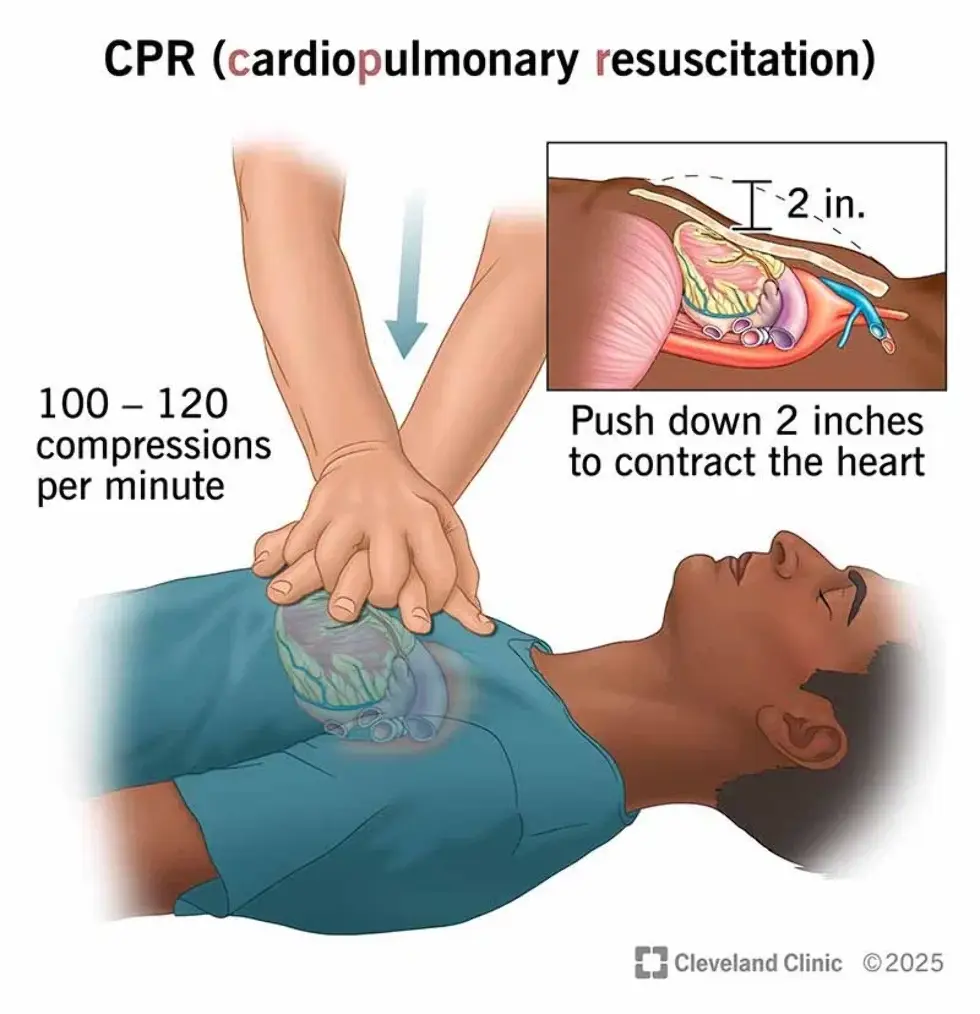
2. Chest Compressions:
- Place the heel of the hand in the centre of the chest.
- interlock your other hand on top.
- RATE: Perform compressions at a rate of 100 to 120 a minute (roughly to the beat of staying alive). Allow the chest to recoil completely between compressions.
- DEPTH: For an Adult, press down to a depth of 5-6 cm.
- RATIO: Give 30 compressions followed byy 2 rescue breaths. Continue until professional help arrives or casulty starts breathing normally
Point to note* However, if you are not trained or comfortable giving breaths, hands only CPR continuous compressions is still highly effective.
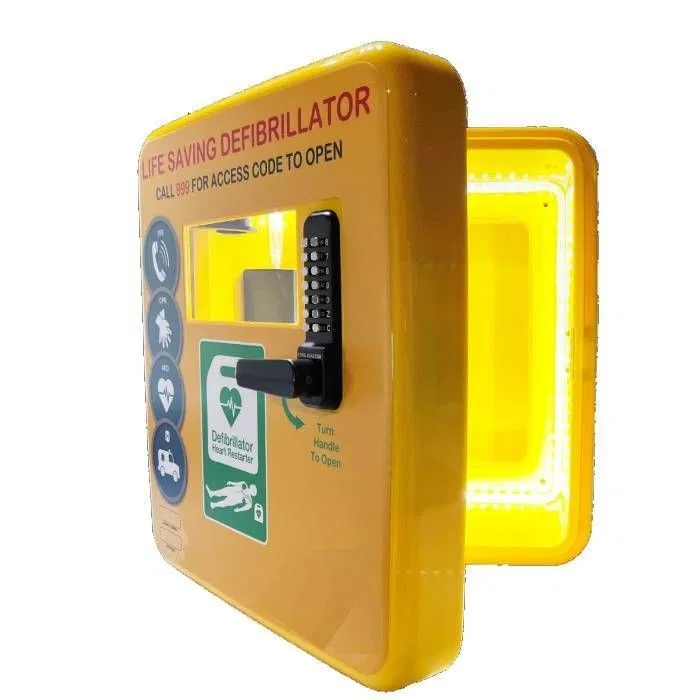
Who can use an AED?
One of the most common theory test questions is about who is allowed to use an AED. The answer is everyone. You do need formal training. Public access AEDs are designed to be used by any member of the public.
How to use an AED
Turn it on: The device will immediately start giving you clear voice prompts to guide you through every step.
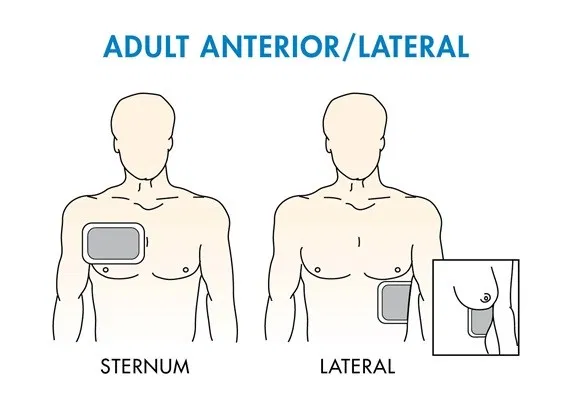
Attach the pads; Follow the diagrams on the pads or machine; Place one pad on the upper-right chest and the other on the lower-left side (below the armpit)
Safety: Do not touch the casualty while the AED is analysing or delivering a shock!
Key Theory test Q and A Examples
Q: What should you do if an AED is available at an incident?
A: Turn it on and follow the verbal Instructions provided by the device.
Q: At What rate should you perform chest compressions during CPR?
A: 100 - 120 compressions per minute.
Q: How can you identfiy a sign that gives an order?
A: It is usually circular.
This guide is based on th Official DVSA 2026 revision materials. For the best results, use the DVSA official Theory practice app and read the Highway Code.
The reason I promote the DVSA is that you are sitting a DVSA test and as such the app mirrors the hot topics of the month in the test by a huge margin so why would'nt you use it?
Author Robert Whyard ADI
____________________________________________________