The DVSA theory test (2026 Edition)
The DVSA Theory Test is the first major milestone for every learner driver in the UK. It checks your understanding of road rules, safe driving behaviour, hazard awareness, and—new for 2026—essential emergency procedures including CPR and AED use. This guide brings everything together so you can prepare confidently and effectively. “If you’re preparing for lessons, our car controls explained guide is a good starting point.”
What the Theory Test Includes
Multiple‑Choice Questions
- 50 questions
- 57 minutes
- Pass mark: 43/50
- Covers road rules, safety, signs, vulnerable road users, and real‑world scenarios
- Some questions now include short video clips
Hazard Perception Test
- 14 video clips
- At least one developing hazard in each clip
- One clip contains two hazards
- Pass mark: 44/75
- Tests your ability to spot danger early and react appropriately
You must pass both parts to receive your theory test certificate.
Key Topics You Need to Know
The 2026 test places stronger emphasis on:
- Vulnerable road users (cyclists, pedestrians, horse riders)
- Smart motorway rules (red X signals, variable speed limits)
- First‑aid basics including CPR and AED use
- Eco‑driving and fuel‑efficient habits
- Road signs and markings
- Safe stopping distances and hazard awareness
These updates reflect modern driving conditions and DVSA safety priorities.
Understanding the Hazard Perception Test
The hazard perception test uses real‑life and CGI clips filmed from the driver’s perspective. Your task is to click when you see a developing hazard—something that may require you to slow down or change direction. The earlier you respond, the higher your score. “You should also review the Show Me Tell Me questions, as these appear on the practical test.”
The test checks your ability to:
- Spot hazards early
- Stay calm under pressure
- Maintain awareness of changing road conditions
How to Prepare Effectively
Learners who prepare well tend to pass first time. The most effective methods include:
- Using the official DVSA Theory Test app
- Revising the Highway Code
- Watching hazard perception clips to improve reaction timing
- Discussing real‑world scenarios during lessons
- Linking theory to practice with your instructor
The DVSA app mirrors the real test and updates monthly with “hot topics”, making it the most accurate preparation tool available.
Booking Your Theory Test
Book your test through the official DVSA website:
https://www.gov.uk/book-theory-test
Avoid third‑party booking sites that charge unnecessary fees.
What to Bring on the Day
- Your photocard driving licence
- Arrive 15 minutes early
- Store your belongings in the provided lockers
- Take your time reading each question carefully
Without your licence, you will not be allowed to take the test.
After You Pass
You’ll receive a theory test certificate with a unique number.
You’ll need this to book your practical driving test.
Your certificate is valid for two years, so begin your practical training promptly.
Road and Traffic Signs
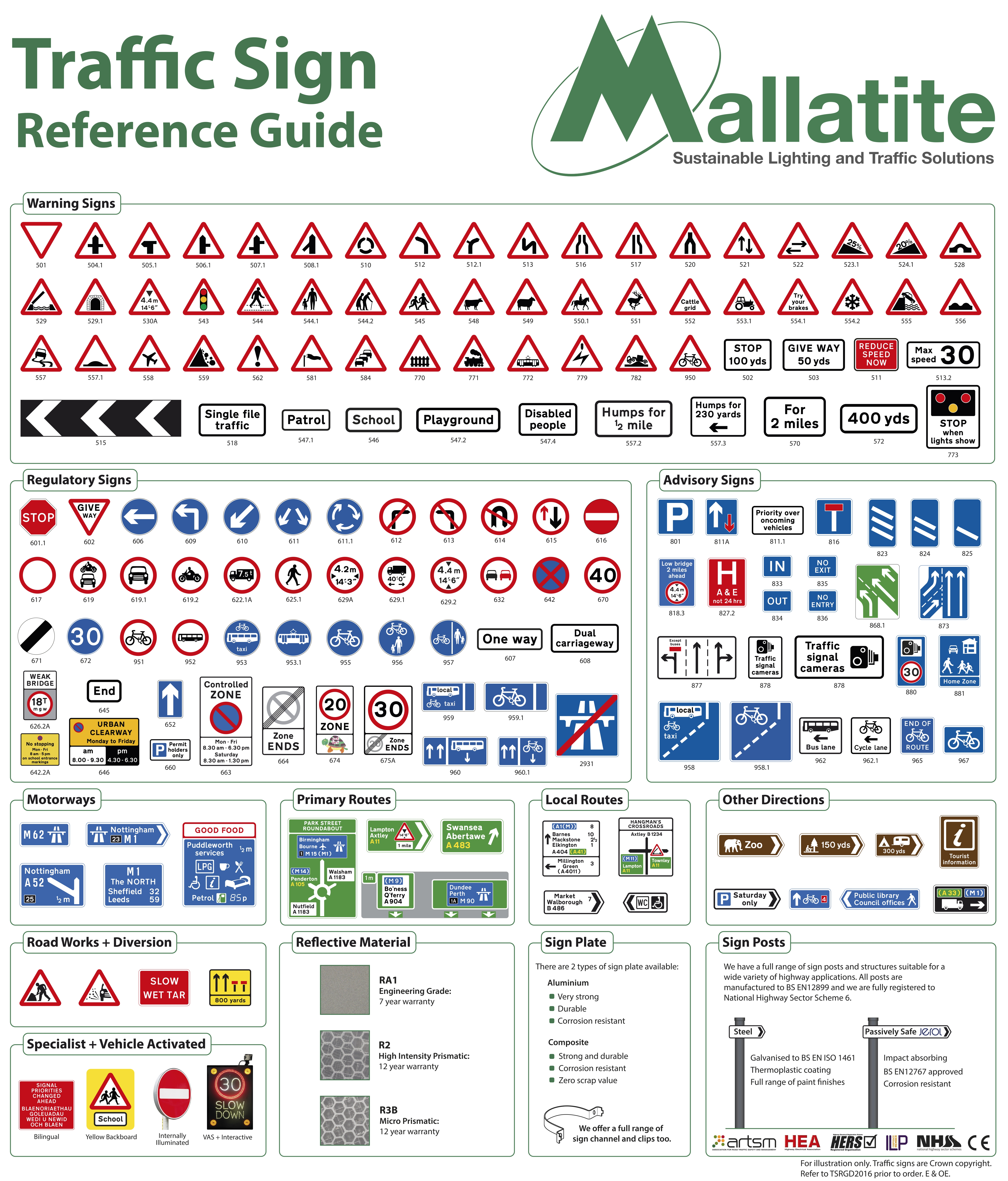
Traffic signs are designed to be recognised quickly by shape and colour.
Signs Giving Orders
Mostly circular:
- Red circles — Prohibitions (No Entry, Speed Limits)
- Blue circles — Mandatory instructions (Turn Left Ahead, Mini‑Roundabout)
Exception: The STOP sign is octagonal for maximum visibility.
Warning Signs
Mostly triangular with a red border.
They warn you about hazards such as bends, crossroads, junctions, or school crossings.
Information and Direction Signs
Mostly rectangular:
- Blue — Motorway information
- Green — Primary routes (A‑roads)
- White — Local or non‑primary routes
- Yellow — Temporary information (road works, diversions)
Plates beneath signs often give important extra details such as times, distances, or restrictions.
Author: Robert Whyard ADI
links
click here to take GOV.UK free theory test
click here DVSA video theory Test
click here hazard perception test official DVSA guide
Theory Test Revision Sheet (Download or View)
DVSA Theory Test Update 2026: CPR and AED Guide for Learners
The DVSA has introduced new questions on CPR and AED use to ensure learners understand essential emergency procedures. These updates reflect real‑world situations where quick, confident action can save a life at the scene of a collision or medical emergency.
Recognising Cardiac Arrest
A casualty in cardiac arrest will show two key signs:
• They are unresponsive.
• They are not breathing normally (may have occasional gasps).
If these signs are present, treat it as a cardiac arrest and begin the DRSABC sequence immediately.
The DRSABC Sequence
This is the recommended approach at the scene of an incident:
• Danger — Check the area is safe for you and the casualty.
• Response — Gently shake their shoulders and shout to check for a reaction.
• Send for help — Call 999 or 112 immediately.
• Airway — Tilt the head back and lift the chin to open the airway.
• Breathing — Look, listen, and feel for normal breathing for up to 10 seconds.
• CPR / Circulation — Begin chest compressions if they are not breathing normally.
• Defibrillation — Use an AED as soon as one is available.
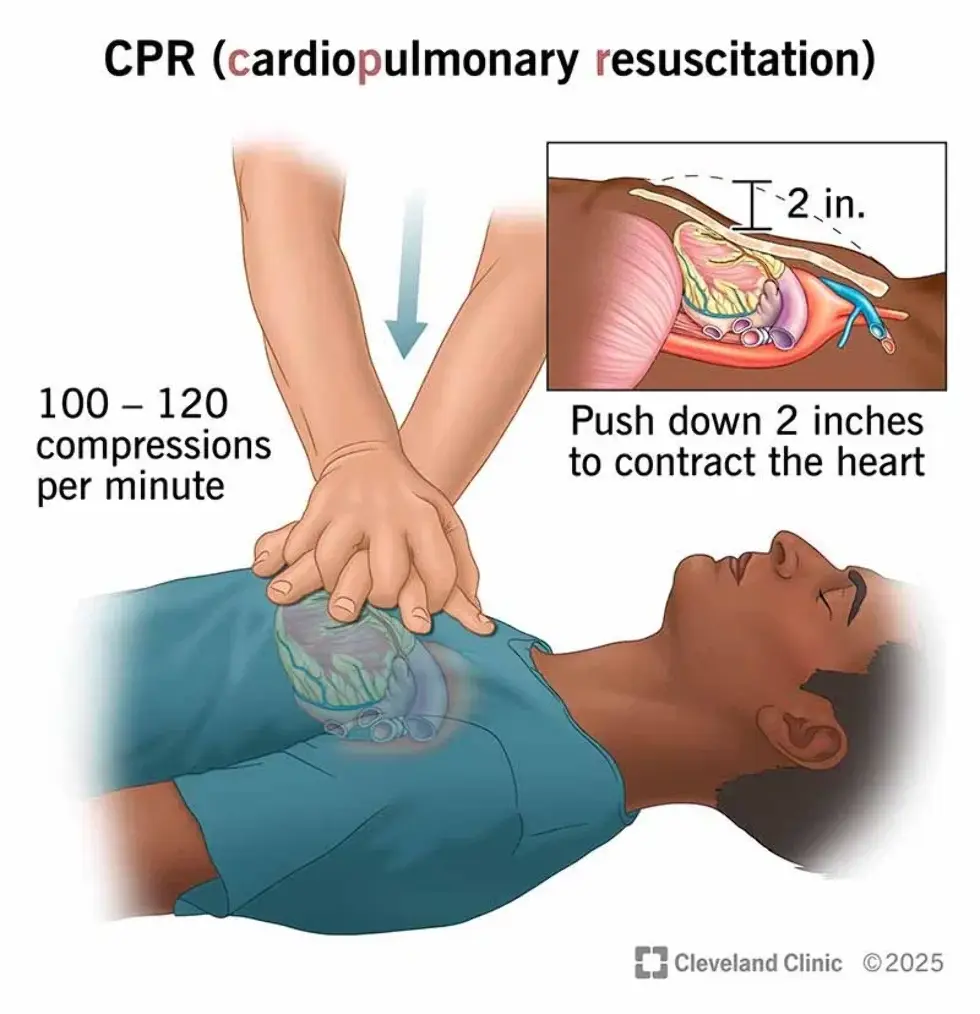
How to Perform CPR (Adult)
• Call 999 and put your phone on speaker.
• Place the heel of your hand in the centre of the chest.
• Interlock your other hand on top.
• Push hard and fast at 100–120 compressions per minute.
• Aim for a depth of 5–6 cm.
• Use a ratio of 30 compressions to 2 breaths.
• If you are not trained or prefer not to give breaths, hands‑only CPR is still effective.
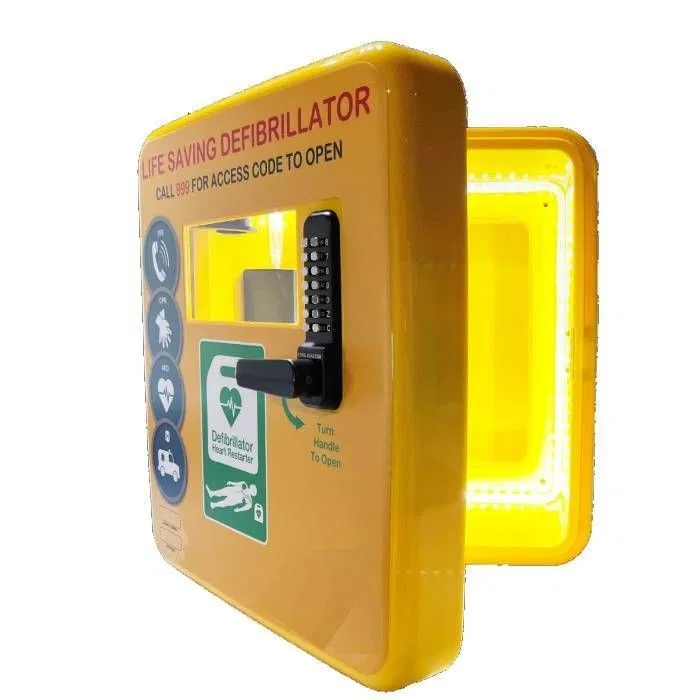
Using an AED
AEDs are designed so anyone can use them, even without training.
• Turn the AED on and follow the voice prompts.
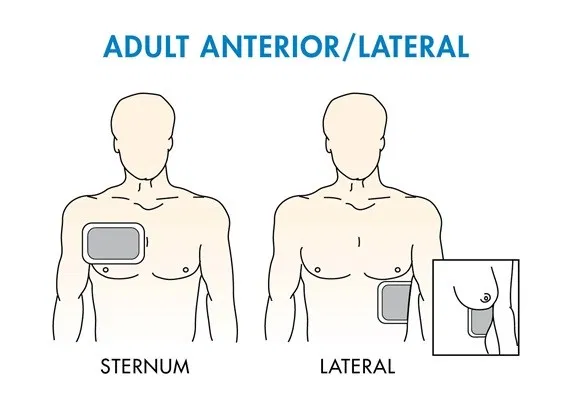
• Attach the pads as shown in the diagrams:
• One pad on the upper‑right chest
• One pad on the lower‑left side
• Ensure no one is touching the casualty during analysis or shock delivery.
• Continue CPR when instructed.Using an AED
AEDs are designed for use by anyone, even without training.
• Turn the AED on and follow the voice prompts.
• Attach the pads as shown in the diagrams:
• One pad on the upper‑right chest
• One pad on the lower‑left side
• Ensure no one is touching the casualty during analysis or shock delivery.
• Continue CPR when instructed.
Why Early Action Matters
Quick CPR and early defibrillation dramatically improve survival:
• No intervention: survival drops rapidly within minutes.
• CPR alone: maintains blood flow and buys time.
• CPR + AED within 3–5 minutes: survival rates can exceed 70%.
Example Theory Test Questions
• What should you do if an AED is available?
Turn it on and follow the instructions.
• What is the correct CPR compression rate?
100–120 compressions per minute.
• What is the first step in DRSABC?
Check for danger.
Who can use an AED?
One of the most common theory test questions is about who is allowed to use an AED. The answer is everyone. You do need formal training. Public access AEDs are designed to be used by any member of the public.
How to use an AED
Turn it on: The device will immediately start giving you clear voice prompts to guide you through every step.
Attach the pads; Follow the diagrams on the pads or machine; Place one pad on the upper-right chest and the other on the lower-left side (below the armpit)
Safety: Do not touch the casualty while the AED is analysing or delivering a shock!
DVSA Official Resources
This guide is based on the official DVSA 2026 revision materials. For the best results, learners should use:
• The DVSA Theory Test app
• The Highway Code (latest edition)
These resources mirror the real DVSA test and update regularly with the latest hot topics, so they give you the most accurate preparation possible.
Why I recommend the DVSA app:
You are sitting a DVSA test, so it makes sense to revise using DVSA materials. The app reflects the real questions and trends far more accurately than third‑party apps.
Useful Links
Author Robert Whyard ADI
____________________________________________________