

learning to drive - The Bottom Line
Driving instructors, are specially trained to help people learn to drive; and know what standards the DVSA expect to pass a UK practical driving test. Only 21 per cent of people pass first time with most passing on the second attempt.
The Essential Mindset for new learners
The Journey for a complete beginner can be long, but with the understanding of the building blocks needed to concrete learn the skills; with tanacity and consistancy goals can be achieved and the driving test past with safe driving skills for life.
What to do
- Having past your theory test you will know and have understanding of the Basics & legal responsibilities regarding health eyesight insurance tax, MOT and roadworthiness of your vehicle.
- Your instructor will show you how to operate the controls of the car, including cockpit checks and pratice steering and clutch control. key point listen to your instructor and suck all the information up like a sponge.
- further controls training inclusive of mastering the pedals (interaction of clutch, brake and gas pedal.) then most importantly learning how to move off and then stop. which has to be the nemesis of learner drivers; and the quicker learned the better you will feel being less anxious.
- Out on the roads, traffic lights another biggie, meeting situations and safe lane positioning. mirrors, signal and looking. anticipation for hazards and planning of early aviodance.
- Negotiating T-junctions open and closed, slip roads correct road positioning on roundabouts and understanding priority. correct action on pedestrian crossings and understanding the different types of crossings, practice is key with everything stated so far
- Reversing and parking including mastering parallel park, bay park front from either side and reverse bay park either side, Emergency stop in a safe and controlled manner
- Country roads and motorways dealing with poor visabilty and high speeds. adapting to different driving conditions and night driving.
- Driving independantly and planning ahead. knowing where your going and how to use a sat nav and electronic driving aids such as adaptive cruise control.
What Not to Do. (common mistakes)
Top 10 reasons for Failing the driving test.
- Not making effective observations at junctions.
- Not using mirrors correctly when changing direction
- Not moving off safely.
- incorrect positioning when turning right at junctions.
- Not having proper control of the steering
- Not responding appropriately to traffic lights.
- Not responding correctly at traffic lights
- poor positioning on road during normal driving
- Not responding correctly to road markings
- not keeping control of the vehicle during reverse parking
Fault categories
- DANGEROUS FAULT : A dangerous fault involves actual danger to you, the examiner, the public or property. You will fail your test if you make any dangerous faults.
- SERIOUS FAULT : A serious fault is something that has the potential to be dangerous
- DRIVING FAULT : A driving fault is not potentially dangerous, but if you keep making the same fault, it could become dangerous.
How structured lessons help
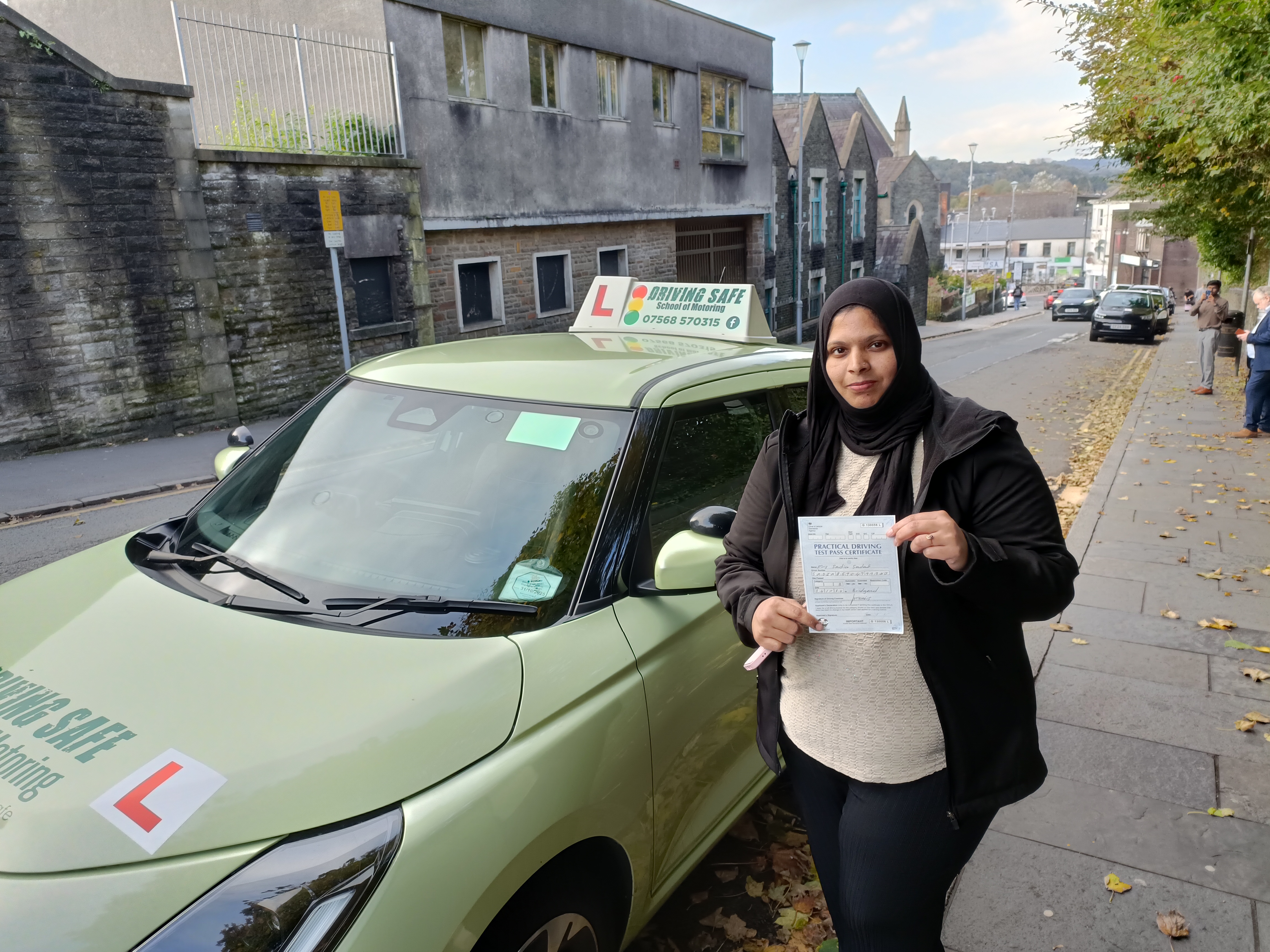
At Driving Safe School of Motoring in Bridgend every lesson is structured, we work at your pace and when you have the ability and confidence to complete the required learning block, we move onto the next and by using this system you move forward with confidence. But this only works with consistancy.
Why consistancy matters
At Driving safe School of Motoring we want you to be able we want you to suceed, and this can only be done with regular consistant lessons as if you miss lessons apathy sets in and you spend all your time doing catch up. remember If you don't prepare - you prepare to fail.
50 out of every 100
Driving tests were failed in Great Britain during
December 2025
ready to pass campaign.gov.uk
Pass Mark to pass your test you must have:
No Serious or Dangerous faults (majors)
15 or fewer driving faults (minors)
Check you’re ready to pass with our checklist
Are you ready to pass? You’ll usually be ready to take your driving test when you can say ‘yes’ to these 5 points.
1. You do not need prompts from your driving instructor
You need to be dealing with every part of driving consistently, confidently and independently – without any prompting from your driving instructor.
You’ll be getting ready for your test when you’re able to adapt to situations and see why developing your skills makes you safer and more fuel-efficient.
2. You do not make serious or dangerous mistakes when you’re driving
You need to be a good and safe driver to pass the driving test.
If you’re making serious or dangerous mistakes during your driving lessons and brushing them off as ‘silly mistakes’, you’re not ready to pass your driving test and drive on your own.
3. You can pass mock driving tests
Taking and passing mock driving tests with your driving instructor will help you understand if you’ve reached the standard that’s needed to pass.
4. You have practised ways of managing your nerves
It’s really important to be able to manage your nerves to be a safe driver.
Practise ways of managing your nerves to help you stay calm and focused when you take your test. This will help you in the vital months after you’ve passed your test, too.
5. Your driving instructor agrees you’re ready
If your driving instructor says you’re not ready to take your driving test, listen to them.
Driving instructors are specially trained road safety experts. They’ve got lots of driving experience – and they know what it takes to pass the driving test. Remember, they want you to be a safe driver, keep your insurance costs low, and enjoy driving for years to come.
Not feeling completely prepared?
Only take your driving test if you’re feeling completely prepared.
You can move your driving test back if you’re not feeling quite ready yet.
It’s free to change your appointment time, as long as you do it at least 10 full working days (Mondays to Saturdays) before your test.
Links
author Robert Whyard ADI